A neglected grease trap can turn a smooth lunch rush into a costly nightmare—think surprise shutdowns, foul odors, and plumbing emergencies. Watch for these red flags so you can act before inspectors or customers notice.
1. Foul, Persisting Odors Around the Kitchen
Rancid, sewer-like smells near sinks or floor drains often mean food fats have decomposed inside the trap.
What to do
Schedule an emergency pump-out and deep clean; enzymes alone won’t remove hardened grease layers.
2. Slow-Draining Sinks or Frequent Backups
If dish sinks or mop stations gurgle and drain slowly, grease is restricting outlet flow.
What to do
Have a pro suction out the trap, then hydro-jet downstream pipework to clear residual buildup.
3. Visible Grease Cap Exceeding 25 Percent
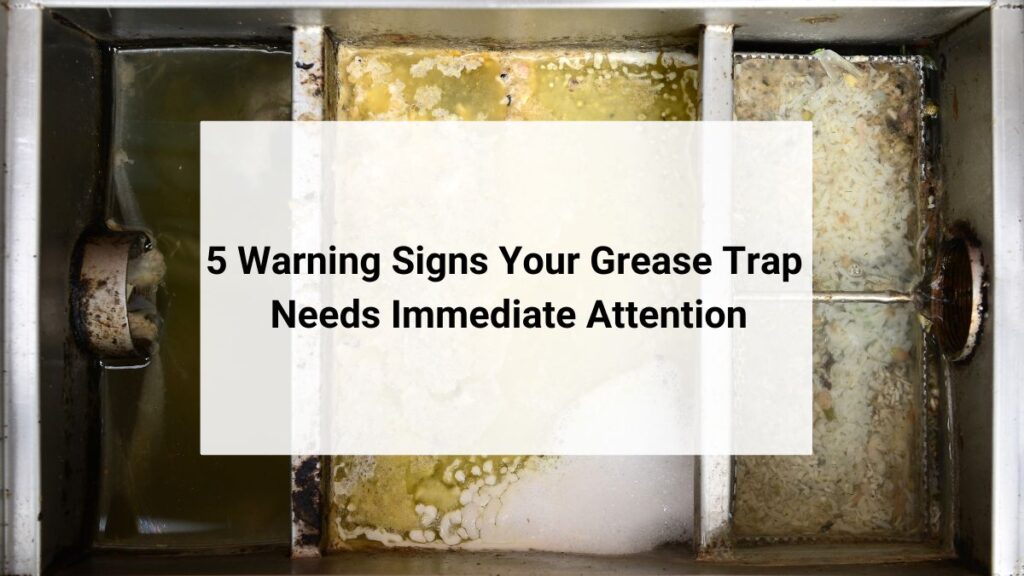
Open the lid: if the floating grease blanket fills more than a quarter of the chamber, capacity is maxed out.
What to do
Follow the “25 % rule”—pump and scrape before fats harden, or risk blockages and fines.
4. Grease Surfacing in Parking-Lot Clean-Outs
Overflowing manholes or shiny films on pavement signal downstream surcharge from an overfull trap.
What to do
Call professionals immediately—municipal penalties for storm-drain contamination can be steep.
5. Health Inspector Citations or Warning Letters
Even a single grease-related violation means your maintenance interval is too long.
What to do
Implement a documented pump-out schedule and keep manifests on hand for the next inspection.
Need rapid, code-compliant grease-trap service? Explore
System4 of Delaware’s restaurant solutions and keep your kitchen flowing—without the mess.